A Time To Share

Our God is a God of Nations:
"He so love the WORLD ... He gave His one and only son..."
Showing posts with label Foochow. Show all posts

Monday, 9 April 2018

FUZHOU PREFECTURE IN CHINA

Fuzhou Prefecture
福州十邑
in China
consists of 10 cities, namely
閩侯
Minhou
永泰
Yongtai
長樂
Changle
福清
Fuqing
連江
Lianjiang
羅源
Luoyuan
古田
Gutian
屏南
Pingnan
閩清
Minqing
平潭
Pingtan

These 10 cities collectively named 
Fuzhou
福州
which is within the Fujian Province 福建省 in China.

When tracing your roots back to China,
if your family belongs to any of the above mentioned Cities,
you are a Fuzhou people.

And when you are a Fuzhou,
you are from
有福之卅
and
you are
有福之人


太好了


Foochow City
福州市
is the Capital of Fujian Province

Foochow wine
is our signature Wine.
We take pride in its red colour.
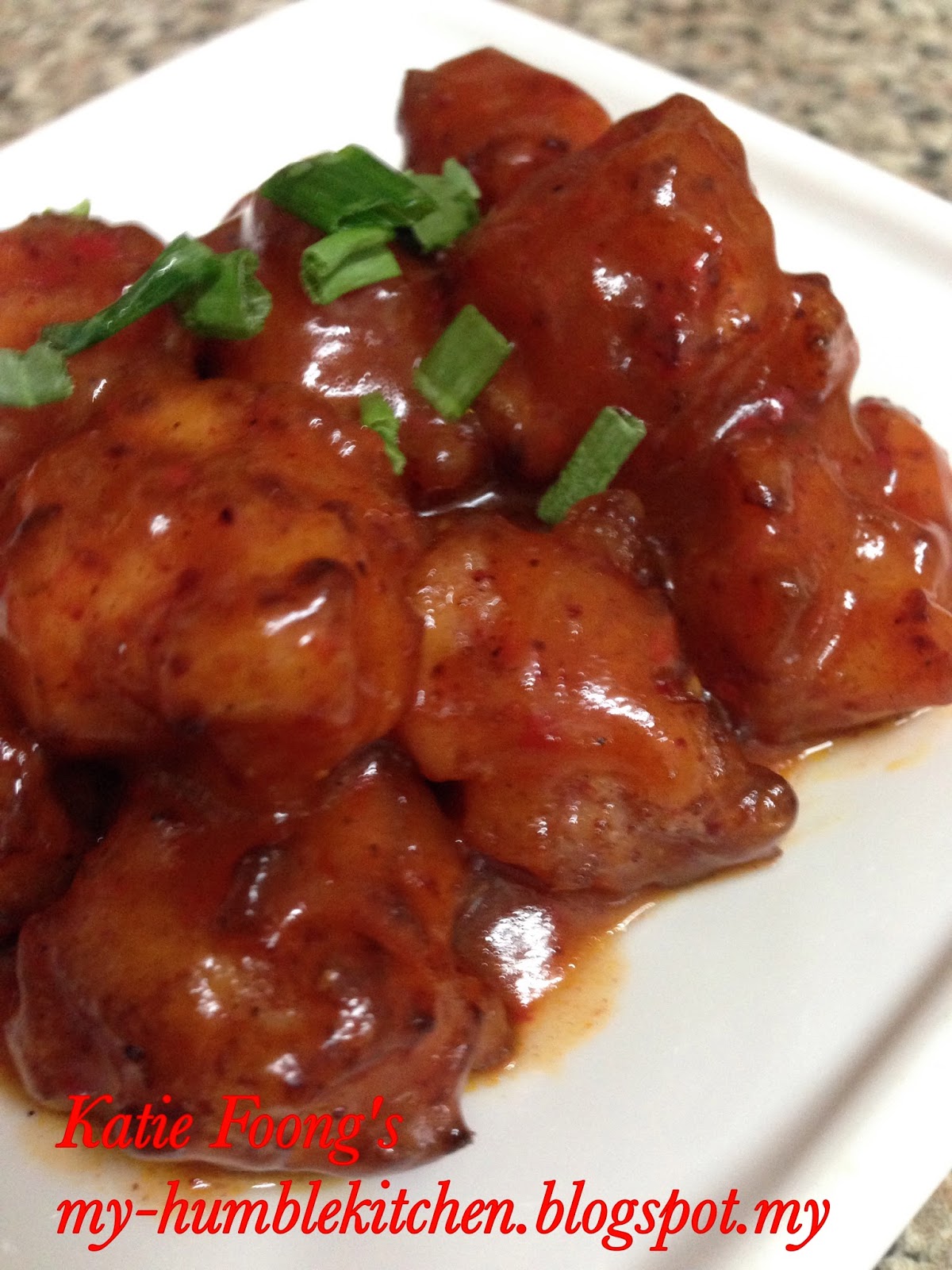
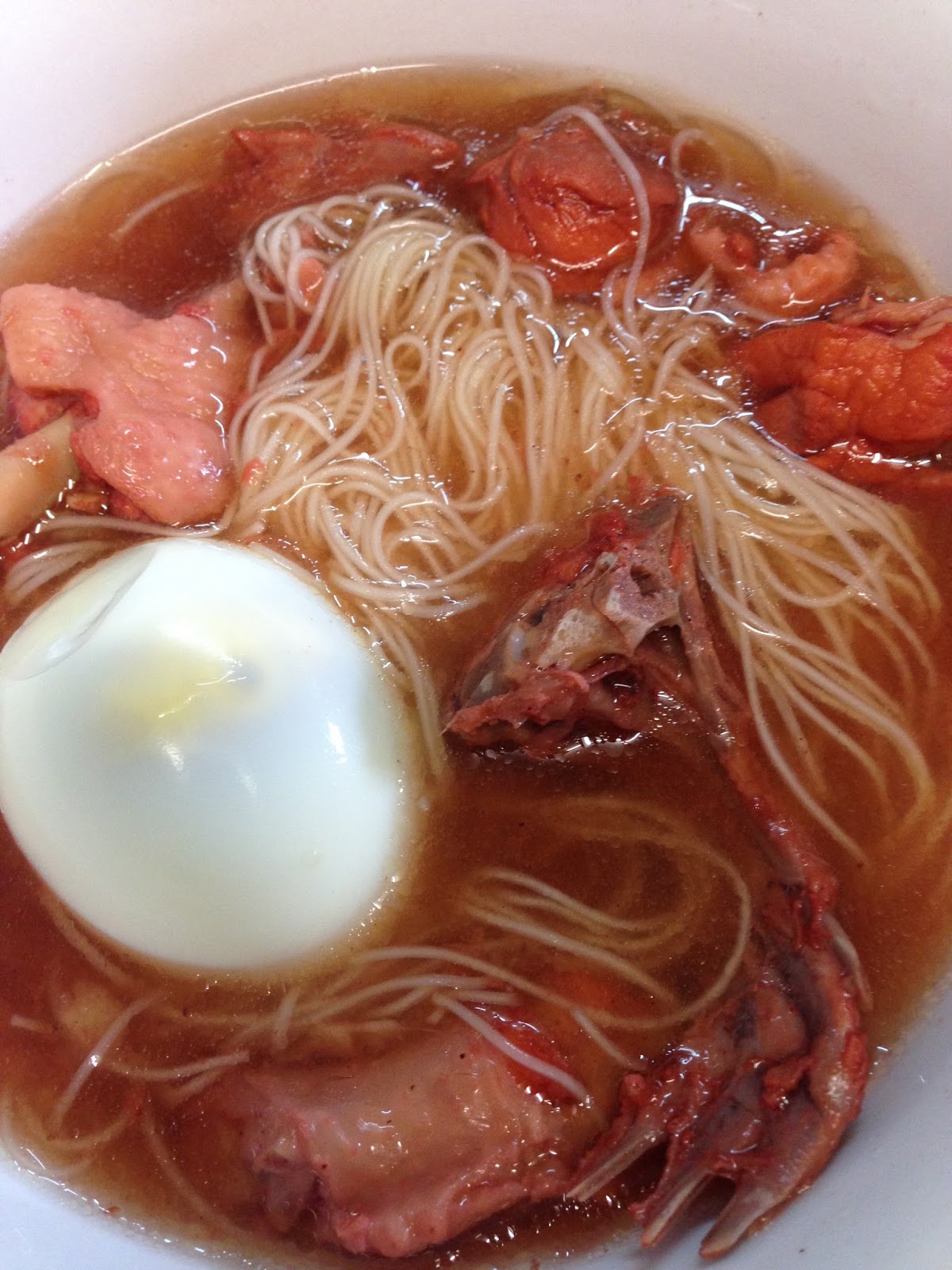
Many of the Foochow dishes either use these rice wine or its residue, 'Chow"

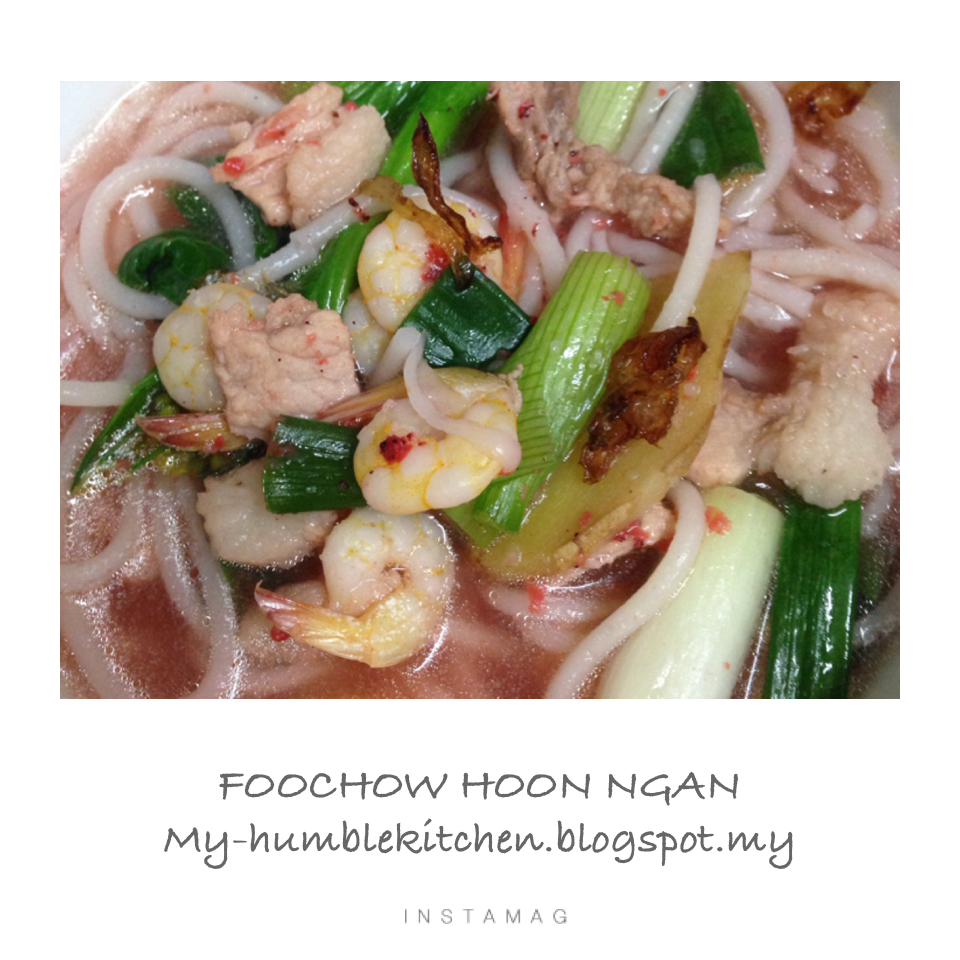
The following are some of the Foochow Delicacies.
If you wish to try,
you can click on the link to get the recipe.

Foochow Red Rice Wine


Foochow Fish Ball


Kompiang


Lychee Pork


Tuesday, 14 March 2017

FOOCHOW DIALECT


Foochow Dialect

The common comment from those who heard 
spoken Foochow Dialect 
is
" Are they arguing or quarrelling?"

Here is one quite out of the ordinary!
Share if you know the dialect


Somebody asked: How to call 'a river' in your dialect?
I replied: Ore
She repeated: How do you say 'river' in Foochow?
I said: Ore
Quite disappointed, she asked again: How do you call prawns in the sea?
I said: Ha
She repeated: How to call?
I said: Ha
Desperately, she asked again: Then, how do you call the ducks in the river?
I said: ark (lower sound)
She repeated: How?
I said: ark (lower sound)
She looked at me sympathetically, and said: You look good, so unfortunate to be dumb! 


Friday, 21 October 2016

LEARN FOOCHOW DIALECT


For benefit of English educated:

A BEI - know

KA LIU - play

NEY YANG - children

MOR TAI YEH - nothing matter

KA LAR CHIA or KAI YAH - bicycle

NU SAN JING JONG - you are pretty

MEET CHEW - beer

LAU MAH - wife

DONG MOH - husband

DIANG PAH - crazy

E Mu - old lady

GONG BEI GONG CHIK - talking nonsense

GUAI AI NU - I love you

SEH BAH MUI ? - have you eaten?

SEH BAH LOH - eaten


Tuesday, 27 October 2015

FOOCHOW DIALECT

"Hu Chiew Noin
Meh Suah Noin"
福州人 不輸人
Foochow people will not lose out to other people

"Hu Chiew Noin
Eh Huat Tat"
福卅人 會發達
Foochow people can prosper in wealth


Wednesday, 2 April 2014

FOOCHOW IN SITIAWAN


I am a Foochow, A Hu-chew-noin.  My parents are both from Simpang Tiga, a small village in Sitiawan.  I was born and brought up in Ipoh.  It was in Ipoh that I met my husband.  He is also a Foochow (ku-eng) from Kampung Koh, a small town in Sitiawan.  As such, we share many fond memories of our 'home town' - Sitiawan.

Sitiawan was predominantly settled by Foochow, or 'huchiu-nen' in our dialect.  In fact, these Foochow people were led by 2 Chinese Methodist pastors, to escape the poverty in Fujian, China to come to Nanyang to look for greener pastures.  They called the place they stepped foot, 'mu-shi-lau', meaning the house of pastors (direct translation from the dialect).  It is better known as Kampung Koh. Today, there are also other dialects like hu-chiang, ku-eng, hu-kkien living in Sitiawan. Many of them speak cantonese too.

Foochow people are very hardworking, especially their women. These Foochow women are thrifty too. This is why the Foochow girls are well sort after for marriage!  Their parents will normally get a higher dowry compared to other dialects!  In return, the bride's parents (think they have more to lose) will put a few rubber trees (signifies the number of  'bar' or estates they give to their daughter) through the windows of the bridal car.  In olden days Sitiawan,  brides were seen with necks and wrists weighed down with chains of gold, not to mentioned the 10 fingers almost full of gold rings from parents and relatives!  Foochow relatives are really generous.

Most of the people in Sitiawan were rubber tappers during the olden days.  They woke up before dawn, some even after mid-night if they were slow workers, to tap the rubber trees.  This was so because they need to finish the job before sunrise.  As it was still dark, they wore a torch-light on the forehead. After lunch, they would normally rest by lying on the cement floors at home.  

Afternoons were the time to gather for celebration if there was any.  As such most of the wedding feasts were held in the afternoons.  Since it was a celebration feast,  the whole family,  young or old would go. The whole family would normally take up a table each.  Be it 12 or 15 persons, they could easily squeeze in because they sat on benches rather than chairs! They would even bring their pots or carrier knowing that there would surely be more than enough on the table!   The host would usually serve 16 to 18 dishes on the table!  So a wedding feast is meant to be shared on the table at the host's house in the afternoon, and a left over dinner at individual homes!  Do you now believe that Foochow are generous people? One thing for sure, these feasts were usually homecooked.  Voluntary helpers would swarm in from all over the village to render help!

Do not be alarmed if you see 2 Foochow standing facing each other and talking loudly.  'Huchiu-nen' usually speaks  'huchiu-wa' or Foochow dialect loudly no matter where, be it in the wet market or airconditioned supermarket!  Once I asked why they need to speak so loudly when the other person is just in front of them.  Guess what is the reply?  " It shows our warmth, and closeness towards each other."  The older generation like my mother takes pride in 'gong-bang-wa' or even sing their 'huchiu-kwo' like the following:  Sung in Foochow:


"Ni Tau Lor Lan, Loh San Kian
Hai Tsui Zhu Chai, Ng Nai Sian
Hor Soak Moi Doh, Ng Nai Tsui
Hor Gian Toh Yin, Ng Nai Chian"

曰頭落山,落山邊
海水煮菜,吳乃盬
好石磨刀,吳乃水
好仔討㛺、 吳乃錢


Direct Translation:

The sun goes down by the side of the mountain
Use sea water to fry vegetable, don't need salt
Use good stone to sharpen knife, don't need water
So, when a good son gets married, don't need money

Many young Foochow left Sitiawan to look for better job opportunities elsewhere.  A few of them even stammer at their once fluent dialect!  Luckily, food still remains as the link between the young and old generation of Foochow people despite the distance that separate them.
  
Mother's Foochow cooking is still the best! Dishes like oinchiu -mian-sian (red wine chicken mian), char-chu-mian (braised noodle), kan-puan (dry blend noodle in black sauce), char-nyupian (sweet and sour fish), lan-baykuk (soft stewed pork ribs with sechuan spicy veg.), kor-lou (spicy, sweet and sour fish maw soup), yen-gwong (meat balls wrap in pork sheets), huchiu-yu-won' (foochow fish ball with pork filling), oinchau-kay (fried chicken in red wine residue), nyu-tau-loon (sour fish head soup), dea-lonn (fluffy oyster egg). 

Not forgetting those pottery baked biscuits  like gong-pian, jing nung piang and hu-chiang miang. These are either sweet or savoury, hard or soft ones according to how they are called.  Others like ching aik koh (groundnut bun), chen-nau-pau (pillow buns with groundnut filling), wha-leng-tong (sweet groundnut soup), tau-sar-pian(biscuits with green pea filling), nuk-pau (pork buns), dea-pian(fried oyster biscuits), hui-bar (twisted torch biscuits). 

Special Foochow food eaten during celebrations and festivals, just to name some, tai-ping lonn (pouch egg soup for peace), tai-ping mian (noodle that signifies peace and reunion), pei-kuo-poon (steamed pulut rice with 8 jewels), pu-lik-kay (black herbal soup boiled with white feather duck), lu-ark (braised duck), char-pei-kuk (sweet and sour pork rib), chun-pian (savoury crepe), ah-wu-chiok (sweet glutinous rice porridge to be boiled for elders on the 29th day of the 1st lunar month- an act of filial piety)

I will try to post the photos of all these delicacies later.

Friday, 16 November 2012

A VISIT TO THE ANCESTRAL HOME

A family trip of the FOONGs


6 brothers and sisters came together
to visit their ancestral home

in "Chi Ping", as the name denotes,


 a village beside the plains of this little stream. . .

A 16-seater took the group out of the busy Fuzhou City,
driving towards the direction of "Ku Tian".
On the way, passing through "Kan Zir" and "Pai Sar",
among the many small towns and villages.

The journey continued and then exit to the hilly regions.
It was a bumpy journey up the hill,
driving along the narrow and  winding cement roads....

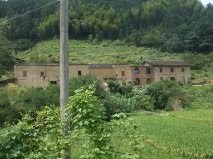
Mud houses like these were found scattered on the hill slopes.


Sigh!

Are we there yet?
Some already feeling giddy and feel like vomitting.

The driver suddenly alerted everyone, "No through road!"

In shock!
everyone look out of the windows...
we were at the peak of the hill!

Hurray!
we reached the house already!


Wow! So BIG!


See, there were many guests' rooms upstairs!

Like to try
balancing yourself up these stairs to reach your room?


Ladies, see the luxury of owning such a big kitchen?


Not too difficult balancing on this plank though,
it is definitely not our choice
if we need to ease ourselves!


Saturday, 27 October 2012

FOOCHOW KOMPIANG


福州光饼

Some like it plain

Some like it stuffed

But all like it fresh from the oven, crispy and nice!


A century old shop in Fuzhou,
still selling Kompiang strung together

Kompiang 
originates from Fuzhou,
 the capital city
 of Fujian Province 
of the People's Republic of China. 

It is a biscuit
 popular among the Chinese Community
 of Foochow (Fuzhou) ancestry.

It was invented for the soldiers
 to eat in the battle fields. 

So it is also called

征東餅

With the hole in the centre,
 the biscuits are strung together
 and easily carried along! 

Some grandmothers said
 that these biscuits were hung around the neck,
 so that they can have access to food
 anytime anywhere without much fuss. 

No cooking is required 
so will not attract the attention
 of the enemies of their whereabouts.

Kompiang is simply a ball of flour, water & salt. 
It is flattened
 & slapped onto the sides of a traditional home-made Chinese oven. 
Kompiang 
may be plain
 or stuffed with fillings of meat, or fats and onions.
Both taste good when fresh from the oven.


If you like kompiang, you may like to try making some for yourself. After much trial and error I have come out with this recipe:

Fuzhou Kompiang

also kown as Foochow Kompyang or Gongpiang 


Biga
177g High Protein Flour
227g water
1/8 tsp yeast

Dough
All of the above Biga
361g High Protein Flour
2 tsp salt
2 tsp sugar
1/8 tsp alkali water
1 Tbsp double action baking powder
120g water-adjust consistency

Method:
1) mix Biga and let rest at room temperature 12-15 hours.
2) put all ingredients in bread machine-dough cycle 15min kneading
3) leave dough to rise 30min
4) preheat to 250'C, put a heavy baking tray inside the oven.
5) divide dough into 20 pieces of 45g each
6) flatten the balls of dough into disks, punch a hole in the centre
7) when you have made enough for a tray, quickly take out the hot tray from the oven & arrange the biscuits on it.
8) spritz with warm water on the biscuits before putting back the tray into the oven @ lowest rack!
9) after 5 min baking, turn off the bottom heat.
10) continue baking for another 10min until brown.

Notes:
1) You can eat them plain-they are crispy when still warm.
    You may toast it the next day to get back the crunch. 


2) If you like it with filling, just lie the biscuit down & slice it across,
    fill it with pieces of roast pork or stew pork.


3) You can even bake them with fillings as below:

Filling:   
Stir fry with some cooking oil: minced pork, chopped big onions, roasted sesame seeds, salt, sugar & pepper to taste. Some dark soya sauce to add to the colour.
To wrap:
@6) before flatten, wrap one tablespoon of filling into the dough   
 7) flatten the ball into a disk
 8) prick some holes on the surface with a fork.
 9) Mist the biscuits & sprinkle some sesame seeds on top to decorate

Stuffed with meat